
Lanier Projected and Actual Releases
A projected date estimates when custody may end under the sentence and current credits. An actual release date records when the person left that custody system. Those dates can differ. A pretrial detainee at Lanier County Jail usually lacks a sentence-based release date because bond, dismissal, plea, transfer, or a court order still controls the outcome.
A sentenced person may have a calculated date, yet that date is not always a gate date. A state record can change after sentence credit, discipline, parole review, a detainer, or a new order. Release from one agency can also lead straight to another agency's custody.
Find Lanier County Projected Dates
Follow the record system that holds the person. GDC is appropriate for state prison and Patten PDC, but not for a routine county bond release.
- Confirm whether the person is in Lanier County Jail, Thomas County on a Lanier hold, Patten PDC, or another GDC facility.
- For state custody, open GDC Find an Offender and accept its disclaimer.
- Search by name, then narrow by GDC ID or case number when possible.
- Review the status, facility, sentence lines, and release date fields actually shown.
- For possible parole, check the State Board's TPM tool.
- For county custody, request the commitment, sentence calculation, jail credit, and current hold data from the Sheriff and court.
- Confirm the final event through the releasing agency.
GDC advises written verification with Inmate Records and Information, PO Box 1529, Forsyth, GA 31029 before assuming its public data is complete. The Lanier County released inmates path covers a named person whose custody system is not yet known.
Georgia Credits Shape Release Dates
Georgia does not use one simple “85 percent” formula for every state offender. O.C.G.A. 42-5-101 authorizes work incentive credits for academic or vocational attainment, satisfactory work, and compliance with behavior standards. GDC's Performance Incentive Credit program, called PIC, may reduce an eligible offender's length of stay through progress in education, vocational work, treatment, work assignments, and good behavior.
Parole adds another layer. O.C.G.A. 42-9-45 generally makes many felony inmates eligible after nine months or one-third of the sentence, whichever is greater, unless an exception applies. Eligibility does not guarantee release. The Board says few people leave at first eligibility. Serious violent and recidivist provisions, including O.C.G.A. 17-10-6.1 and 17-10-7, can change or remove parole eligibility.
GDC's PIC explanation describes the incentive program.
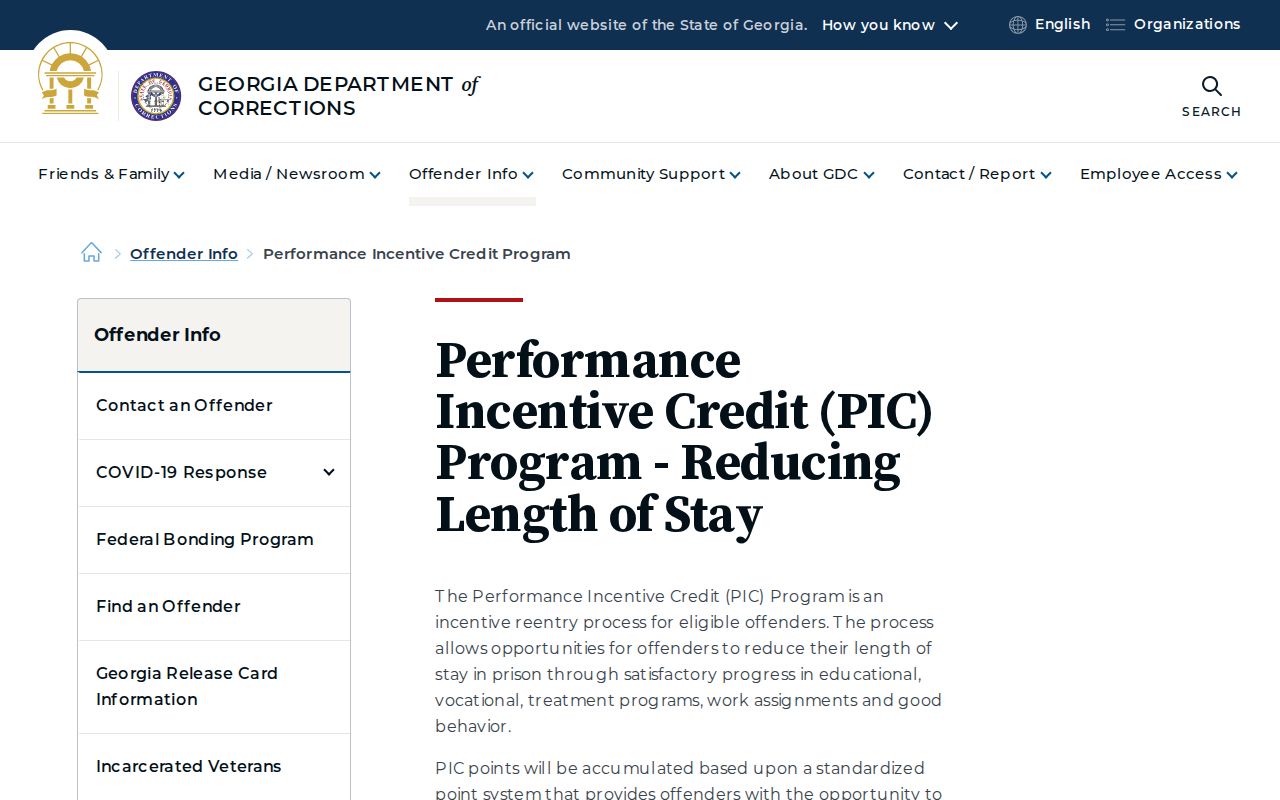
The program can affect eligible state timing, but the live offender and Board records remain necessary for one person's date.
Why Lanier Release Dates Change
A date can move in either direction as the official sentence and custody data change. County and state calculations do not use the same record path.
| Factor | Possible effect |
|---|---|
| Corrected jail or sentence credit | Changes time already counted toward the sentence. |
| New sentence or court modification | Adds, removes, or restructures custody time. |
| Discipline or poor performance | May reduce credits or delay tentative timing. |
| PIC progress | May advance timing within program and Board limits for an eligible offender. |
| Parole denial or reconsideration | Can defer or change tentative parole timing. |
| Incomplete required program | May prevent the planned step toward release. |
| Detainer or hold | May cause transfer to another agency instead of community release. |
Lanier County Jail has no local good-time formula documented in the research. The sentencing order, jail credit, and Sheriff's calculation are the proper sources for a county sentence.
Confirm Lanier County Release Timing
For a state offender, compare the GDC profile with the State Board record. A release date in GDC concerns state custody. A Tentative Parole Month concerns Board review and remains conditional. After release to parole, DCS handles community supervision and the Board's parolee tools may show post-release status.
For county custody, ask the Sheriff's records custodian and the sentencing court for the current commitment and any release order. The weekly Jail Media Report can later show a booked-and-released category, but its text does not supply a projected date or exact release time. Georgia VINE can provide an alert where the agency participates; the VINE Inmate Check explains registration and verification.
Lanier TPM and PIC Timing
Georgia's distinctive release-date language uses separate concepts. The State Board's Tentative Parole Month, or TPM, is the month for final review and possible setting of a parole release date. It is not a final decision. The Board may reconsider a prior decision up to release.
When parole is tentatively scheduled, the Board's guidelines describe both a TPM and a PIC date. The span between them is the maximum amount by which good conduct can advance the TPM. PIC does not turn every sentence into the same percentage calculation. Offense category, parole eligibility, sentence law, conduct, and program progress still matter.
The State Board's TPM page explains the tentative status.
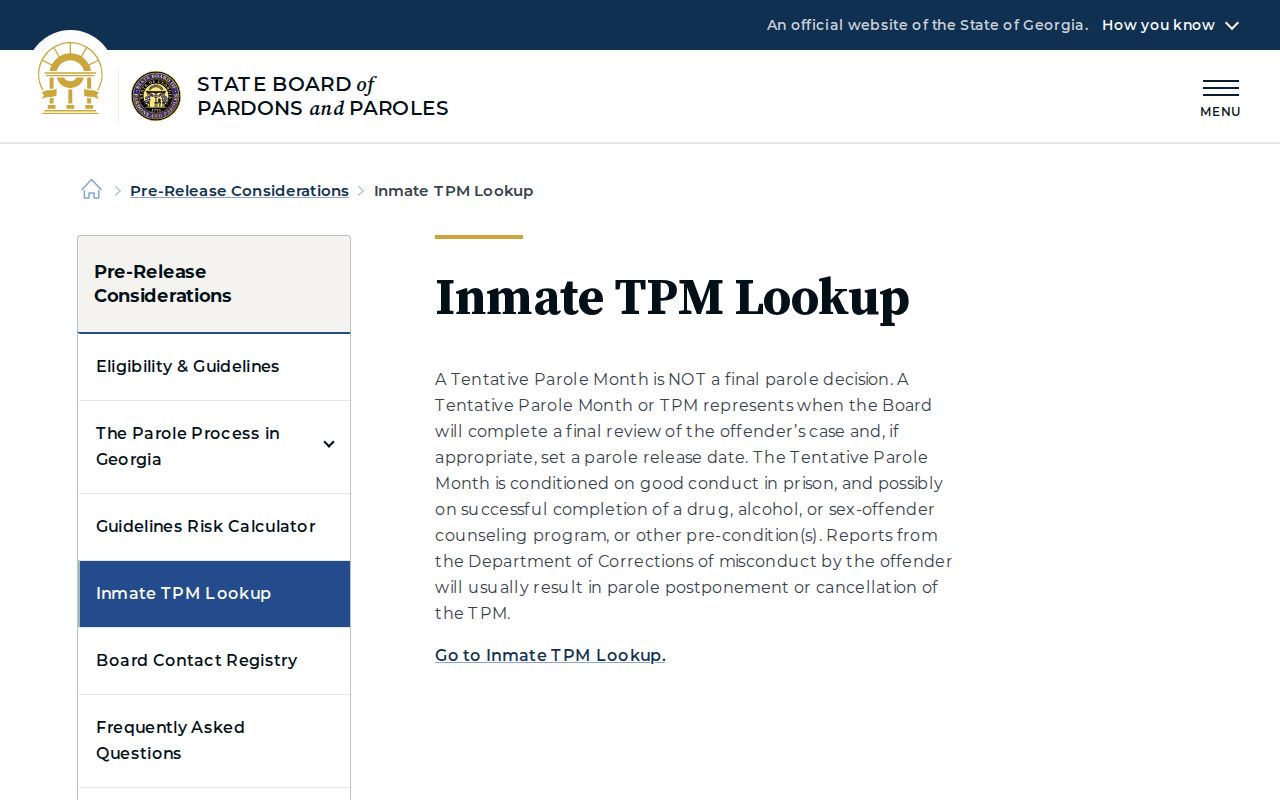
The official explanation shows why a TPM should never be presented as a guaranteed release date.
Lanier County Jail Date Records
No official Lanier County Jail good-time policy was found in the reviewed sources. The weekly report shows booking and process details, charges, bond fields, and whether an entry is currently booked or booked and released. It does not publish a local projected-date calculation. A bond amount also does not prove that bond was posted or that no other hold remains.
For a sentenced county inmate, the best sources are the signed sentencing order, the jail's commitment record, credited time, and any later court order. A precise open-records request can ask the Sheriff's custodian for the current sentence calculation, jail credit applied, projected completion date if maintained, release date and time after release, and any transfer or hold information that is public. The court clerk can supply the order that authorizes the custody term.
Pretrial custody works differently. There may be no projected release date at all. Bond can be set or changed, a hearing can alter custody, charges can be dismissed, or another agency can lodge a hold. The correct answer may therefore be a pending court event rather than a calendar date.
Read Georgia Release Date Records
GDC's offender search serves state prison, state facilities, and Patten PDC records. Search results should be matched by GDC ID, case number, personal description, status, and facility rather than name alone. Record the release-date label exactly as it appears because one profile may show different data from another.
The GDC date and a State Board TPM answer different questions. The GDC record concerns corrections status and sentence data. TPM concerns tentative parole review. Neither should be silently converted into an actual release date. If a GDC profile says released or discharged, that confirms the state-custody status shown, but it does not prove all parole or felony probation supervision has ended.
The Department of Community Supervision's Lakeland virtual office serves Lanier and nearby counties. That office is the local route when the person has left physical custody but remains on parole or felony probation. A supervision start is not the same as sentence discharge, and the end of incarceration is not always the end of the case.
Lanier Holds Change Release Outcomes
A detainer is a request or legal basis for another agency to take custody. It can turn a planned release into a transfer. Thomas County may physically house a person for Lanier, GDC may receive a sentenced person, and federal or immigration authorities may become the next custodian. The first agency's release date then marks departure from that system, not necessarily return to the community.
Check the agency named in the booking or court record. A Thomas County entry with Lanier hold language should be confirmed with both the housing jail and the Lanier office controlling the case. A state transfer belongs in GDC records. Federal custody is checked through the Bureau of Prisons locator, while ICE's locator is aimed at current ICE custody or qualifying CBP custody and is not a long-term local release archive.
An actual date can also differ across records because each office records its own event. The jail may record departure from its building, GDC may record admission or discharge from state custody, and the court may record the order that caused the move. Compare the labels and agencies instead of assuming every date describes the same act.
When dates conflict, preserve each source and ask the custodian what its field means. A process date, booking date, tentative month, sentence end date, parole begin date, and release date are not interchangeable. Exact wording is the safest way to avoid turning a provisional date into a false claim of release.
Note: Ask whether the date means release to the community, parole, probation, another jail, GDC, federal custody, or ICE.