
Georgia Parole Release Records
The Board considers parole for eligible GDC felony inmates and may set a Tentative Parole Month, deny parole, reconsider a decision, or grant parole. Some life-sentence grants can include work-release completion as a condition. A majority Board vote is required for clemency action.
After physical release to parole, the Georgia Department of Community Supervision manages field supervision. The Board's Parolee Database helps verify parole status, while DCS identifies the local office. GDC remains the source for state correctional status and release-date fields.
Check Lanier Parole Status
Choose the Board tool based on whether the person remains in GDC custody or has been released to parole.
- Confirm the GDC ID and state custody record.
- Use the Inmate TPM Lookup for tentative parole timing.
- Copy the month and any explanation without calling it a release date.
- Use the Parolee Database when checking a person released to parole.
- Compare the GDC ID, case number, parole begin date, and wanted field when displayed.
- Contact DCS Lakeland for the local supervision route.
- Confirm actual release through GDC rather than a public meeting notice.
The Lanier County release search explains when a county jail, GDC, court, Board, or federal record is the correct source.
State Board Records Contact
The Board publishes its parole tools, process explanations, and public meeting notices online. Its central contact serves parole and corrections questions.
2 Martin Luther King Jr. Drive SE
Suite 430, Balcony Level, West Tower
Atlanta, GA 30334
404-656-4661
The Board lists media and public information at 404-657-9450. For a person-specific status question, provide the correct GDC ID and use the TPM or parolee tool before calling. The DCS Lakeland office, not the Board's Atlanta office, is the local contact for day-to-day felony probation or parole supervision in Lanier County.
Georgia Parole Tool Differences
The Board page links to two public tools that serve different stages. Neither is a current county jail roster.
| Tool or record | What it answers |
|---|---|
| Inmate TPM Lookup | When final parole review may occur for an eligible state inmate. |
| Parolee Database | Post-release parole information such as GDC ID, case data, parole begin date, or wanted status when shown. |
| GDC offender profile | State correctional status, facility, sentence, and release-date data. |
| DCS field office | The local supervision office after release to parole or felony probation. |
| Board meeting notice | Date, time, place, and public notice for a policy and operations meeting. |
A meeting notice does not disclose an individual parole decision. Use the person tools and agency records for that task.
Public Meetings Are Not Hearings
Georgia's public monthly Board meetings cover policy and operations. The Board has expressly stated that offender cases are not considered and parole decisions are not made at those meetings. A public calendar should therefore never be presented as a schedule of individual inmate parole hearings.
The Board's meeting explanation is shown below.
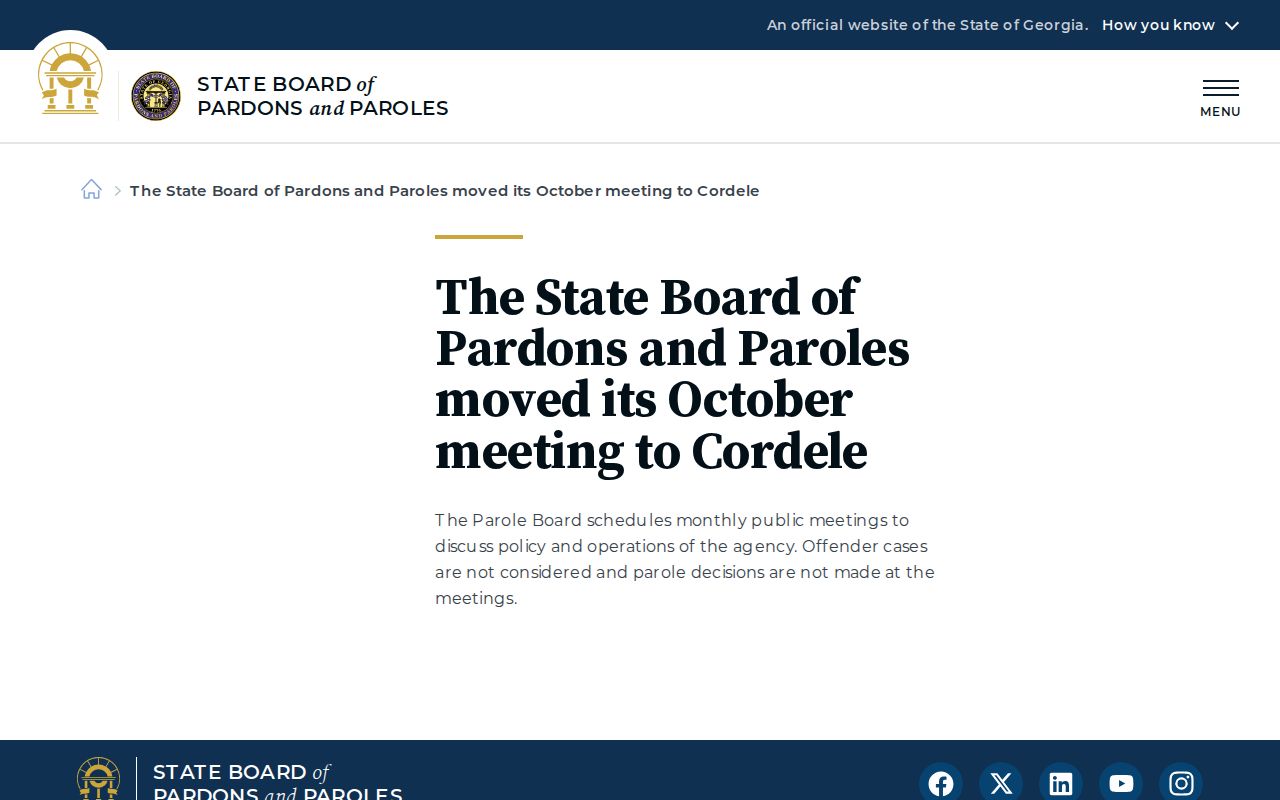
The official notice separates open public business from the confidential person-specific decision process.
The Board publishes meeting notices through its press releases page. Notices can show date, time, place, and open-meeting information. They are useful for observing Board operations, not for predicting the day a named Lanier County offender will receive a decision.
Georgia Parole Decisions Are Daily
The Board states that members make parole decisions daily. Its monthly meetings do not include parole consideration or decisions for eligible offenders. This daily review model explains why there is no county-style public hearing calendar for a named inmate.
The Board's January meeting page confirms that distinction.
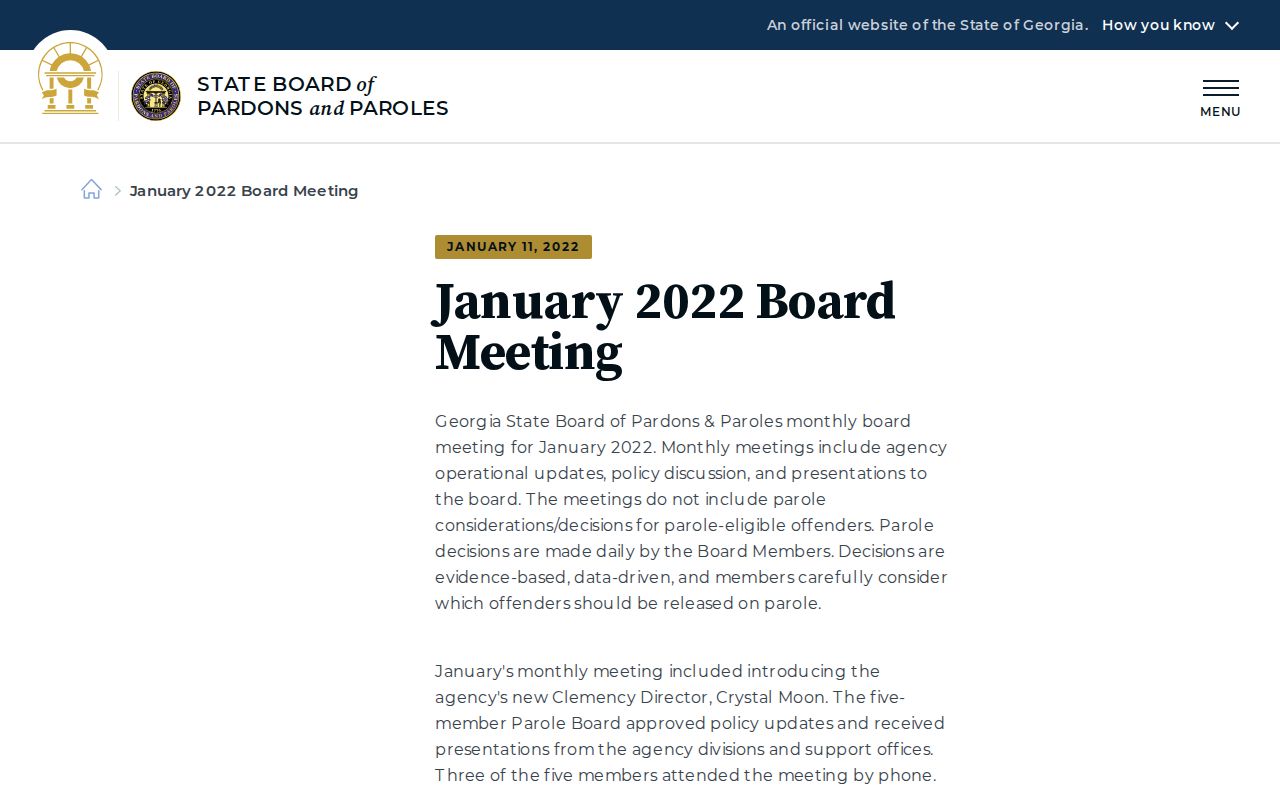
The source directs person-specific research back to the Board's review and lookup tools rather than the monthly meeting agenda.
A prior decision can be reconsidered up to the release date. Even a TPM remains conditional on final review, conduct, and any required program completion. Verify the GDC profile after the expected period.
Lanier Parole Eligibility Limits
O.C.G.A. 42-9-45 supplies the general parole eligibility framework. The Board says many parole-eligible felony inmates are eligible after one-third of the sentence, but eligibility is not a promise of release and few leave at initial eligibility.
Serious violent felony categories, fourth-or-more felony recidivists, and life-without-parole sentences create important exceptions. O.C.G.A. 17-10-6.1 and 17-10-7 must be read with the general rule. Life sentence eligibility can depend on offense timing and category, with Board materials describing seven, fourteen, or thirty-year markers.
Do not replace this offense-specific framework with one broad percentage. The sentence, offense date, statutory category, Board record, and GDC profile determine the useful public explanation.
Read Georgia Parole Outcomes
A TPM means the Board plans final review in that month and may then set a release date. A denial means parole was not granted at that review. Reconsideration can change an earlier action. A grant still requires confirmation that the person actually left GDC custody.
After release, check the Parolee Database and DCS. The DCS Lakeland virtual office serves Lanier, the Alapaha Circuit, and nearby counties from PO Box 633, Lakeland, GA 31635. It lists 229-569-5051 and weekday hours from 8:00 a.m. to 4:30 p.m. Eastern.
Note: Parole is a Board decision after part of a prison sentence; probation is imposed by a court.
Verify Lanier Parole Records
Wanted status, when shown in parolee search, should be matched by GDC ID and confirmed with the Board or DCS. A partial-name result is not enough. No Lanier-specific online warrant list was found, so the State Board tool and direct agency contact are the documented routes for parole status.
Public meeting notices still serve a valid purpose. They show when and where the Board discusses operations and policy under open-meeting rules. They do not reveal the daily review schedule for a named offender. Use those notices for Board business and the inmate tools for person-specific timing.
Before release, GDC provides the custody and sentence record. TPM supplies tentative parole timing. After release, the parolee database and DCS identify post-release status. The court docket may also matter when probation, a revocation, or another sentence overlaps the parole record.
When a TPM changes, do not assume an error. The Board can reconsider a decision, conduct can affect timing, and required programs may remain incomplete. Record the date checked and revisit the official tool. Actual departure must be confirmed with GDC after the expected period.
The result should be saved with the lookup date, GDC ID, and exact status wording. That context makes later verification with the Board, GDC, or DCS clear and avoids confusing tentative review with a completed Lanier County parole release.