
Where GDC Releases Lead
A GDC release can mean parole, discharge at the end of state custody, conditional release, or transfer to another jurisdiction. The profile's status and release-date fields describe the state correctional record. They do not automatically show that every supervision duty or outside hold ended.
People released to parole or felony probation are supervised by the Georgia Department of Community Supervision. The State Board handles parole decisions and tentative parole timing. Courts retain the sentence and disposition orders. These systems must be combined when the question extends beyond departure from a GDC facility.
Confirm a GDC State Release
The search accepts several routes, so start with the strongest identifier available. Common names require a close match on more than one field.
- Open the GDC offender query.
- Accept the public-search disclaimer if shown.
- Search by name, description, GDC ID, or case number.
- Narrow the result with sex, race, age range, or physical details when available.
- Open the profile and record the GDC ID, status, facility, offenses, sentence lines, and release date.
- Check the State Board when parole timing or parole status is involved.
- Request written GDC verification if the result conflicts with the court record.
The Lanier County release search helps identify whether the county jail, GDC, court, BOP, or another agency is the proper first source.
GDC Release Records Contact
GDC lists a central contact for inmate questions and gives a separate verification address in the offender-search disclaimer.
300 Patrol Road
Forsyth, GA 31029
404-656-4661
For written verification, address correspondence to Inmate Records and Information, PO Box 1529, Forsyth, GA 31029. Include the full name, GDC ID if known, case number, facility, and exact release field or date in question. Written verification is especially useful when a public result appears incomplete or when an old court record points to state custody but the name search fails.
Read GDC Offender Fields
GDC says Find an Offender can locate a person by description, name, ID, or case number. Its family guidance identifies facility, charges, and release date as useful results. Photographs display automatically when available. Exact labels can vary by profile.
| Profile detail | Release use |
|---|---|
| GDC ID and case number | Distinguish the intended state record. |
| Status and facility | Show the state custody status and last listed location. |
| Offense and sentence lines | Connect the profile to the state sentence. |
| Release date | Provides the date label shown by GDC for that record. |
| Photo and description | Help confirm identity, but do not prove current custody alone. |
Do not rename an unverified field as “actual,” “maximum,” or “projected.” Copy the live label. The State Board uses Tentative Parole Month for a different purpose, and TPM is not a final release date.
Lanier County to GDC Custody
A Lanier arrest may begin in the county jail and later become a state record after sentencing or transfer. The Sheriff's weekly report can document the early booking, but a release years later belongs to the GDC, Board, DCS, and court systems. Searching only the county PDF would miss the state-custody history.
Patten PDC is a local example. It stands in Lakeland but is operated by GDC as a probation detention center. People there are checked through the state offender search and supervision records, not through the Lanier booked-and-released report. The same rule applies to a Lanier case that led to a state prison elsewhere.
Note: Physical location in Lanier County does not turn a GDC facility into a county jail.
GDC Release Date Limits
Georgia timing uses several concepts. A GDC release date belongs to the corrections profile. A Tentative Parole Month belongs to the Board's review process. A PIC date relates to the possible advance of tentative parole timing through eligible progress and good conduct.
O.C.G.A. 42-5-101 authorizes work incentive credits for attainment, work, and behavior. The GDC Performance Incentive Credit program describes eligible progress in education, treatment, vocational work, assignments, and conduct. Parole eligibility is offense-specific. It should not be reduced to one generic percentage.
A date can change after corrected credit, a new sentence, discipline, program status, parole action, court modification, or an outside hold. A projected date is therefore not proof that release occurred. Confirm the final status after the date passes.
Use the GDC Search Form
The official GDC offender query form is the direct search source for a Lanier County state offender.
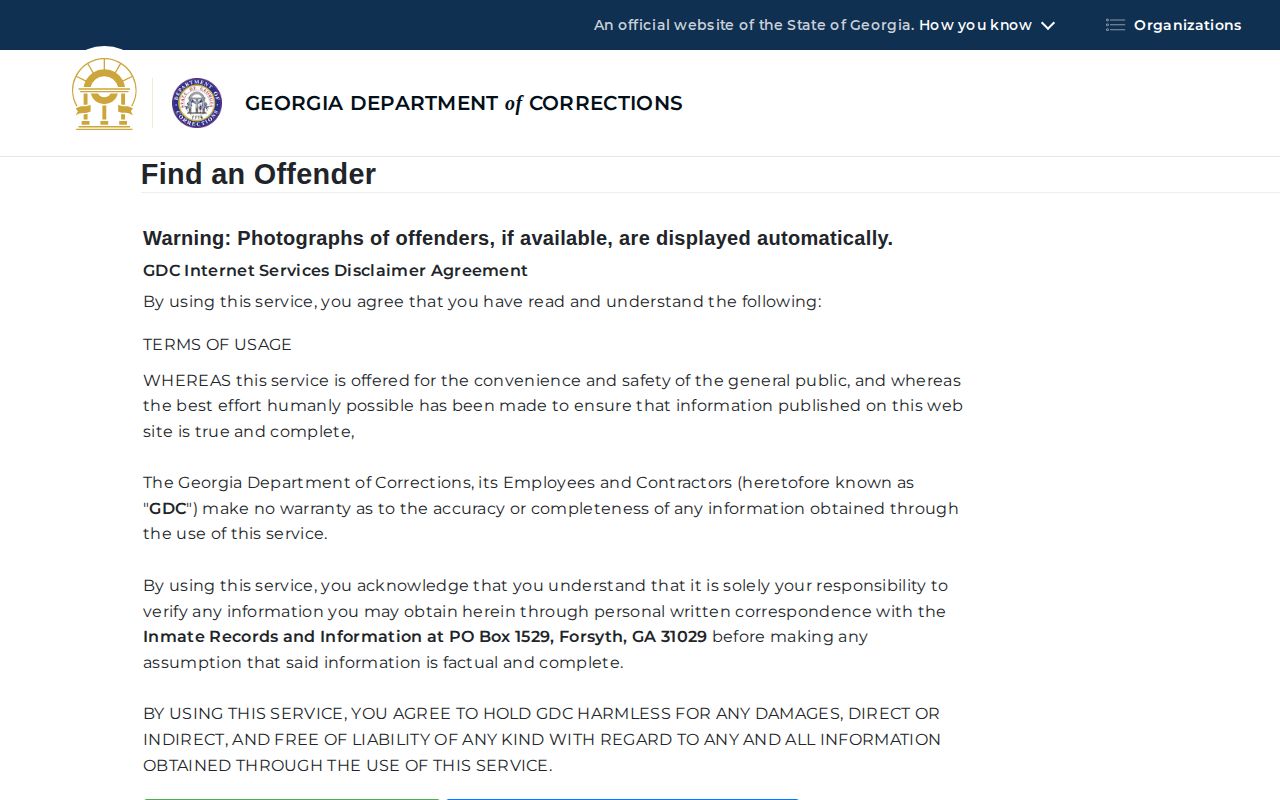
The form supports the statewide lookup, while written GDC records and the sentencing court provide the verification layer.
If a profile says released or discharged, check DCS and the State Board before concluding all supervision ended. The parolee database can show post-release parole information, while the DCS Lakeland virtual office covers local community supervision for Lanier.
No GDC Release Result
Repeat the search with spelling variants and use an ID or case number when possible. A routine county misdemeanor bond release may have no GDC record because it never became state custody. Conversely, an old Lanier jail report may show only the arrest before transfer to GDC.
If the court says the person was sentenced to state custody, contact GDC at 404-656-4661 or write to Inmate Records and Information. Preserve the court case number and sentencing date. If the person was instead housed in Thomas County for Lanier, use that jail's released roster and then confirm the Lanier case.
Verify Lanier GDC Matches
A search can fail when the record uses a middle name, suffix, hyphen, or different spelling. Run narrow variants before concluding that GDC has no record. When more than one match appears, compare the GDC ID, physical description, case number, offense, and facility. A photo can help confirm identity, but status and sentence fields control the custody finding.
After a released state result appears, determine whether parole or felony probation continues. The State Board's Parolee Database and the DCS Lakeland office address that layer. A parole begin date does not mean the sentence vanished, and release from prison does not equal discharge from supervision.
Court records remain the durable source for the sentence itself. The docket may explain a corrected sentence, probation revocation, first-offender treatment, or another order that changes state custody. When a profile date and court order differ, preserve both and ask GDC which calculation is current.
GDC records are separate from federal and immigration systems. A transfer to BOP or ICE cannot be resolved through the state offender form alone. Describe the event as departure from GDC custody until the next custodian or community destination is confirmed.